China Top 10 Cervical Interbody Fusion Cage Manufacturers

Choosing a cervical implant supplier is not simply a matter of comparing prices or browsing attractive product catalogs. It requires careful attention to design control, material quality, clinical experience, and manufacturing consistency. This guide introduces China’s top 10 cervical interbody fusion cage manufacturers through practical evaluation criteria, including implant geometry, radiolucent marker placement, surface technology, packaging, and quality management systems.

Details matter.

A cage may look precise on a product page, yet its real value depends on dimensional accuracy, handling during surgery, and predictable performance after implantation. Experienced manufacturers usually provide technical drawings, sterilization information, inspection records, and traceable production data. Their teams may also support surgeons with sizing options, trial instruments, and procedure-specific guidance. These points help buyers assess reliability beyond marketing language.

The manufacturers discussed here serve different markets and may offer implants made from PEEK, titanium, or other approved materials. Some focus on broad product portfolios, while others specialize in customized solutions or export support. However, a “top 10” list should not be treated as a universal ranking. Supplier capabilities can change, and public information is sometimes incomplete. Buyers should verify current certifications, regulatory approvals, clinical evidence, and post-market service before making decisions. Independent clinical judgment remains essential. This article provides a structured starting point, not a substitute for professional evaluation.
China Top 10 Cervical Interbody Fusion Cage Manufacturers

Cervical Interbody Fusion Cages: Design, Purpose, and Clinical Role

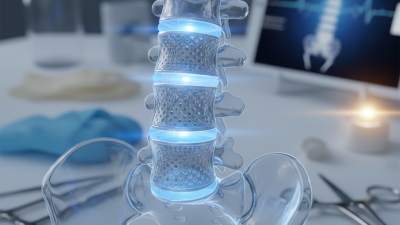
Cervical interbody fusion cages are small implants placed between vertebral bodies after disc removal. They help restore disc height, support alignment, and create space for bone fusion. A typical cage has a hollow chamber for graft material and a textured or toothed surface. The chamber is not a magic solution. Bone biology, fixation, and patient health still influence healing.

Their clinical role is both mechanical and biological. By maintaining foraminal height, the cage may reduce pressure around an affected nerve root. Surgeons also consider endplate strength, implant angle, and the risk of subsidence. Imaging helps confirm placement and later assess fusion. Material choice matters too. PEEK can support radiographic assessment, while titanium may encourage bone contact through its surface structure. These advantages depend on design and handling.

When evaluating Chinese manufacturers, hospitals should examine validated dimensions, sterilization controls, traceability, and quality-system evidence. Manufacturing consistency matters: a tiny edge defect can affect insertion or endplate contact. Clinical teams should match cage geometry to anatomy, surgical approach, and graft strategy rather than follow a catalogue image. No cage is perfect. Long-term results also deserve attention, because early radiographs cannot prove solid fusion. Independent clinical data, transparent instructions, and post-market monitoring make product claims more trustworthy.

China’s Cervical Fusion Cage Manufacturing Landscape

China’s cervical fusion cage manufacturing landscape is broad, technically capable, and still developing. The leading ten manufacturers are not defined by production volume alone. Design accuracy matters. Their products commonly use PEEK, titanium, or hybrid structures to balance radiolucency, strength, and bone integration. Engineers adjust cage height, footprint, lordotic angle, and graft windows for different cervical levels.

Reliable manufacturers usually maintain controlled machining, surface treatment, cleaning, and packaging processes. A cage may look simple, but a small change in endplate contact can affect placement and subsidence risk. Quality teams should review dimensional inspection records, material certificates, sterilization validation, and batch traceability. ISO 13485-based systems support consistency, but certification alone does not prove clinical performance. Evidence matters.

Purchasers should examine how manufacturers collect surgeon feedback and respond to design failures. Clear trial instruments, readable markings, and stable inserter connections can improve operating-room efficiency. Some factories provide strong engineering support but publish limited clinical data. That gap deserves attention. No supplier is flawless. Public information may also be uneven, especially for newer facilities. A careful evaluation should compare independent testing, regulatory documentation, production capacity, delivery history, and post-market responsiveness. Cost is relevant, but it should never replace evidence, fit verification, or manufacturing discipline.

China Top 10 Cervical Interbody Fusion Cage Manufacturers

China’s Cervical Fusion Cage Manufacturing Landscape: Material Density Comparison

Material selection is a key manufacturing factor in cervical interbody fusion cages. PEEK offers a bone-like radiolucency profile and low density, while titanium and tantalum provide higher density and strong structural performance. The values shown represent standard material densities rather than company or brand market shares.

Selection Criteria for Evaluating Chinese Cage Manufacturers

China Top 10 Cervical Interbody Fusion Cage Manufacturers

Selection Criteria for Evaluating Chinese Cage Manufacturers

Choosing a Chinese cervical interbody fusion cage manufacturer requires more than comparing prices. AHRQ’s HCUP Statistical Brief No. 203 reported a 206% rise in U.S. cervical spinal fusion procedures between 1998 and 2011. This growth highlights the need for consistent design, traceability, and clinical responsibility.

Review each manufacturer’s ISO 13485 certification, product registration, and quality-control records. Ask for mechanical testing under ASTM F2077 and subsidence testing under ASTM F2267. Materials should have documented implant-grade specifications, such as PEEK or titanium alloy. Check pore size, surface treatment, radiographic markers, and available implant heights. These details affect handling during surgery. They also influence postoperative imaging.

Clinical evidence deserves careful attention. Look for peer-reviewed studies, follow-up periods, patient numbers, and clearly defined fusion rates. A sales brochure is not clinical proof. The FDA’s guidance on spinal implant submissions also emphasizes risk analysis, biocompatibility, sterilization, and performance testing. However, even strong laboratory data cannot fully predict outcomes in every patient. That limitation deserves honest discussion.

Tips: Request sample test reports and sterilization validation records. Visit the factory when possible. Observe cleanroom controls, inspection steps, and batch labeling. Confirm complaint-handling procedures and post-market surveillance. Do not rely on certificates alone; outdated documents can create false confidence. One practical weakness remains: some suppliers provide limited long-term clinical data, so buyers should treat unsupported claims cautiously.

Profiles of the Top 10 Chinese Cervical Cage Manufacturers

China Top 10 Cervical Interbody Fusion Cage Manufacturers

Profiles of the Top 10 Chinese Cervical Cage Manufacturers

China’s cervical cage sector includes manufacturers with different strengths, equipment, and clinical priorities. One focuses on PEEK cages with radiopaque markers for clear postoperative imaging. Another develops titanium implants with textured surfaces and controlled porosity. A third combines both materials, supporting surgeons who prefer varied imaging and fixation options. These differences matter during case planning.

Several manufacturers emphasize anatomical design. Their teams study cervical lordosis, implant footprints, and endplate contact through digital modeling. One supplier offers multiple heights and footprints, helping surgeons match smaller or larger vertebral spaces. Another invests in rapid prototyping and finite element analysis. A further company highlights integrated fixation, using screw angles and locking features to improve intraoperative control. Small details count.

The remaining profiles show a stronger focus on production reliability. One manufacturer maintains automated machining and dimensional inspection for repeatable cage geometry. Another uses batch traceability, recording material lots, inspection data, and packaging checks. A specialist in additive manufacturing promotes lattice structures, although pore design still requires careful clinical assessment. One established supplier supports hospital feedback and surgeon training, while another provides private-label production and documentation services.

Yet no profile should be accepted without verification. Buyers should review material certificates, sterilization records, quality-system evidence, and relevant clinical data. Some product descriptions sound more convincing than the available evidence. That is worth questioning. Experiences may also differ between laboratories, hospitals, and patient groups. A responsible selection process compares design, manufacturing control, surgeon usability, and long-term follow-up instead of relying on promotional language.

Quality Standards, Certification, and Market Considerations

China Top 10 Cervical Interbody Fusion Cage Manufacturers

Quality cannot be judged by polished packaging or a low quotation. Manufacturers should operate under ISO 13485 and maintain documented risk controls. Their cages should show evidence from ASTM F2077 compression testing and ASTM F2267 subsidence testing. Material traceability matters. So does sterilization validation.

MarketsandMarkets’ 2024 Spinal Implants Market report estimated the sector at about USD 11.7 billion in 2024, with continued growth through 2029. This expansion increases procurement pressure, but demand alone proves nothing. Buyers should verify NMPA registration, ISO certificates, and applicable export approvals. FDA 510(k) clearance or EU MDR compliance may be necessary for specific destinations. Certificates must match the legal manufacturer and product model.

Look beyond the certificate.

A reliable supplier should provide dimensional inspection records, lot numbers, biocompatibility data under ISO 10993, and packaging integrity results. Clinical evidence may be limited for newer designs, especially when long-term follow-up is unavailable. That weakness deserves open discussion. Some evaluations also rely heavily on mechanical tests, which cannot fully reproduce patient anatomy or surgical technique. During audits, review nonconformity records, complaint handling, and change-control procedures. Factory visits can reveal practical details, such as cleanroom discipline and whether operators record measurements consistently. Pricing remains important, but a cheaper cage can create hidden verification and supply risks.

China Top 10 Cervical Interbody Fusion Cage Manufacturers - Quality Standards, Certification, and Market Considerations

No. Anonymized Manufacturer Profile Typical Cage Material Common Product Configuration Applicable Quality Standards Certification or Regulatory Evidence to Verify Key Technical Evaluation Points Market Considerations
1 Established spinal implant manufacturer PEEK, titanium alloy, or PEEK with radiopaque markers Standalone cervical fusion cage in multiple footprints and heights ISO 13485; ISO 10993 for biological evaluation; applicable ASTM or equivalent mechanical test methods Valid quality-management certificate, device registration, technical file, risk-management records, and traceability documentation Subsidence resistance, migration resistance, radiographic visibility, dimensional accuracy, and fatigue performance Suitable for hospitals requiring stable supply, documented validation, and repeatable production quality
2 PEEK-focused implant producer Implant-grade PEEK, commonly combined with tantalum or titanium markers Lordotic and non-lordotic cages with open graft windows ISO 13485; ISO 10993; ASTM F2026 for PEEK implant material where applicable Material certificates, polymer grade documentation, sterilization validation, and post-market surveillance procedures Radiolucency, elastic modulus, marker fixation, surface condition, and resistance to deformation Often preferred when postoperative imaging and modulus compatibility are important purchasing criteria
3 Titanium additive-manufacturing specialist Titanium alloy, commonly Ti-6Al-4V ELI Porous or lattice-structured cervical cages ISO 13485; ISO 14971 risk management; ASTM F136 for titanium alloy where applicable Powder control, build-record traceability, cleaning validation, CT inspection, and additive-process validation Porosity consistency, pore interconnectivity, surface roughness, fatigue strength, and particulate control May offer enhanced bone-ingrowth surfaces but generally requires stronger process documentation and cost review
4 OEM and private-label medical-device supplier PEEK or titanium alloy according to customer specification Customer-branded standard or customized cage families ISO 13485; ISO 14971; design-control requirements under the target market's regulations Quality agreement, design-transfer records, change-control procedures, audit rights, and batch-release documentation Customization control, interchangeability, packaging integrity, labeling accuracy, and production scalability Attractive for distributors seeking private-label products, but ownership of technical files must be clearly defined
5 Minimally invasive surgery system supplier PEEK, titanium, or composite configurations Cages designed for anterior cervical access and instrument compatibility ISO 13485; ISO 14971; usability engineering and packaging standards as applicable Instrument compatibility tests, usability records, sterilization status, and validated surgical instructions Insertion control, anti-migration teeth, graft containment, instrument engagement, and visibility under fluoroscopy System-level compatibility can be more important than cage price in operating-room procurement
6 High-volume CNC machining manufacturer PEEK or titanium alloy produced through validated machining processes Standardized cages with controlled dimensional tolerances ISO 13485; ISO 14971; applicable material and mechanical test standards Incoming inspection, in-process inspection, final inspection, calibration records, and lot traceability Dimensional repeatability, burr removal, surface finish, cleanliness, and packaging protection Can provide competitive unit economics for large-volume orders, subject to minimum-order quantities
7 Custom anatomical-design developer PEEK, titanium alloy, or patient-specific combinations where legally permitted Multiple footprints, heights, lordotic angles, and graft-window geometries ISO 13485; ISO 14971; design verification and validation requirements Design-history documentation, software validation where applicable, engineering-change control, and regulatory clearance Anatomical fit, endplate contact, subsidence risk, implant sizing, and reproducibility of customized designs Customization may improve fit but can increase planning time, validation burden, and regulatory complexity
8 Export-oriented orthopedic implant supplier PEEK, titanium alloy, or cobalt-chromium components where relevant Internationally packaged cervical cage and instrument sets ISO 13485; ISO 14971; target-market regulatory and labeling requirements Export licenses, certificates of free sale where applicable, country-specific registrations, and authorized-representative arrangements Label translation, UDI or equivalent identification, shipping validation, shelf-life data, and complaint handling Regulatory readiness and after-sales responsiveness should be assessed separately for every destination market
9 Integrated cage-and-fixation system manufacturer PEEK or titanium cage with titanium fixation components Stand-alone anchored cage or cage compatible with anterior plate systems ISO 13485; ISO 14971; mechanical testing of the complete construct Construct-level test reports, screw or anchor specifications, sterilization validation, and clinical-risk documentation Construct stability, screw or anchor pull-out, subsidence, adjacent tissue clearance, and surgical technique Integrated systems may simplify inventory but require full-system regulatory and compatibility review
10 Cost-efficient regional supplier Medical-grade PEEK or titanium alloy Core cervical cage sizes with optional instrument kits ISO 13485; ISO 14971; applicable national device regulations and recognized test methods Current certification scope, inspection reports, sterilization records, product registration, and supplier-audit results Basic mechanical strength, cleanliness, dimensional conformity, packaging integrity, and production continuity May suit price-sensitive markets, but buyers should confirm clinical evidence, warranty terms, and replacement availability

Note: Manufacturer identities and brand-specific claims are intentionally omitted. Certification status, product registration, clinical evidence, and mechanical-test results should be verified directly from current official documentation before procurement.